While MCNP is recognized as one of the most powerful and important Monte Carlo-based radiation transport codes, students often find it challenging to learn and use. In most cases, modern students have little to no experience using computer programs that do not have a graphical user interface (GUI) and do not use a mouse or other pointer device. The input for MCNP has remained essentially unchanged from when it was first designed for input using punch cards. In fact, the input lines are still referred to as cards and the total file is called a deck from the days of punch card use.
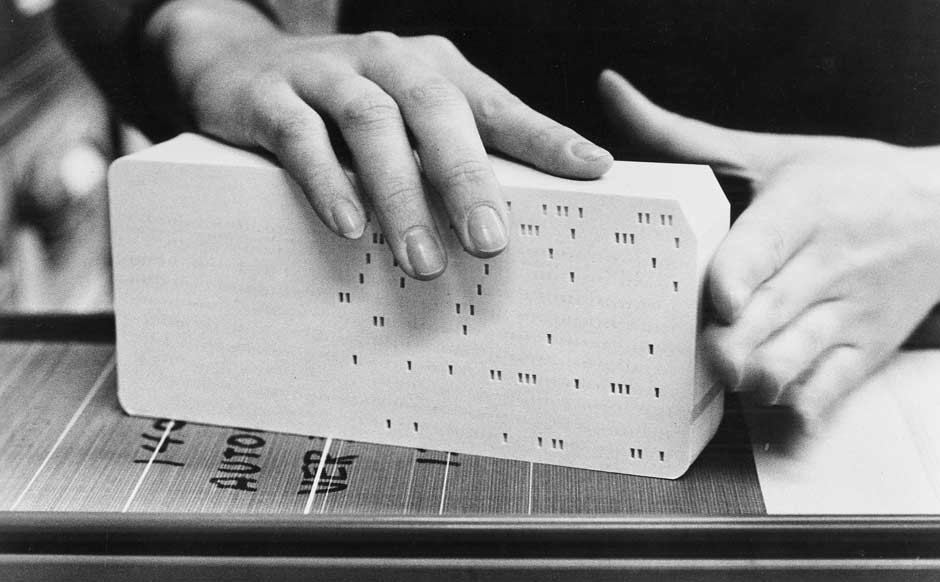
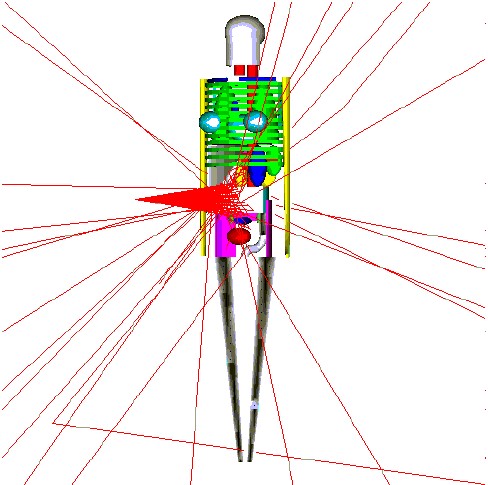
For a generation of students who have never had to boot a computer from a DOS prompt, the input file made of lines on a text editor can be frustrating and considered archaic. However, when students eventually learn how to do the input for MCNP, they understand how the free format allows the flexibility to model almost any conceivable transport problem. In fact, MCNP has been used to model everything from complex structures like nuclear reactors to even the human body.
For years students have been introduced to using MCNP through the book An MCNP Primer by Shultis and Faw. (Shultis; 2011) The primer is an excellent introduction to the code for first-time users. It was last updated for MCNP 5. This text uses much of the information from Shultis and Faw’s primer with some updates for MCNP 6.2 to include the depletion, or BURN, card that was added when MCNP 5 was combined with MCNPX to form MCNP 6. In addition to depletion, MCNPX was designed to transport charged particles as well as neutrons and photons. When the two versions were combined, MCNP 6 gained those features as well.
In this chapter
Open Chapter 5 in the PDF (page 125)- 1. General Rules for MCNP Input8 min read
Also: Building the Input Deck– Define Materials
Also: Building the Input Deck– Cell Cards
Example 5.1
- 6. Plotting in MCNP4 min read
- 7. Running A Model in MCNP4 min read
Also: Reading the MCNP Output
Example 5.2
References
Full bibliography- IBM (2016). Image of puchcards. URL: https://www.ibm.com/history/punched-card
- Shultis, J. K. ; Faw, R. E. (2011). An MCNP Primer, Department of Mechanical and Nuclear Engineering, Manhattan, KS. https://mcnp.lanl.gov/pdf_files/Book_MonteCarlo_2011_ShultisFaw_AnMCNPPrimer.pdf
- Van Riper, Kenneth A. ; Metzger, R. L. (1996). Mcnp studies of doses from clinical x-ray procedures, Transactions of the American Nuclear Society, Vol. 75. URL: http://www.whiterockscience.com/bodybuilder/ans.html