
The primary purpose of engineering is to design something for a practical purpose. This is what separates engineering from art. Everything in an engineered product should have a purpose. Most engineers do not physically construct their design. It is essential that engineers can accurately and completely convey their design intent to the machinists or fabricators that will manufacture their product. Even if they are building their entire design themselves, accurate plans and drawings are necessary to ensure that it is made to specifications.
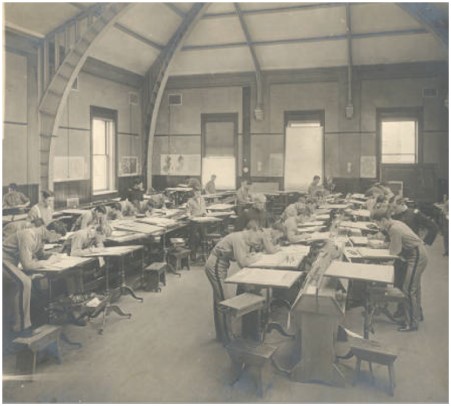
For years, students took courses in mechanical drawing and drafting. They learned the skills to work with drafting instruments to make accurate scale drawings for engineering. Even after personal computers became relatively ubiquitous in the late 1900’s computer aided design programs were not widespread. They were very expensive and required so much computing power that they were only available to a few users within large engineering firms or special academic settings operating on dedicated machines. As technology continued to improve, CAD programs, like Solidworks®, began to be offered for use on Windows computers at a reasonable price. Now CAD has completely replaced the pencil and ruler for mechanical drafting. With the widespread use CAD and CAD classes, there are many excellent resources in print and online that will help the user. One such resource is William E. Howard and Joseph C. Musto’s Introduction to Solid Modeling Using Solidworks® 2014. (Howard and Musto; 2015) This text will not provide the complete depth of books that are dedicated to the subject. It will provide some basic examples and instruction in CAD specifically for nuclear engineering projects.
In this chapter
Open Chapter 7 in the PDF (page 213)- 1. Basic Construction of Solid Bodies6 min read
Also: Formatting Part and Assembly Templates Solidworks®
- 2. Creating a Part in Solidworks®10 min read
- 4. Creating an Assembly from Parts7 min read
Also: Creating A Mechanical Drawing
Also: Introduction to Computer Aided Manufacturing
References
Full bibliography- Howard, W. E. and Musto, J. C. (2015). Introduction to Solid Modeling Using SolidWorks 2014, McGraw-Hill Education, New York, NY. https://books.google.com/books?vid=ISBN9780078021244
- Stockbidge, W. H. (1904). Second class in drawing academy.